
The Future of Dental Education Is More Than Just Digital
Dental education is evolving faster than ever. Around the world, universities and dental training institutions are embracing digital learning, AI-assisted assessment, and simulation-based education to prepare students before they treat real patients.
While technologies such as virtual reality (VR), artificial intelligence (AI), and haptic simulation continue to attract attention, one challenge remains consistent across almost every dental school:
How can institutions train more students efficiently without expanding classroom space or dramatically increasing investment?
For many educators, the answer lies in a smarter simulation laboratory design rather than simply purchasing more equipment.
The New Challenge Facing Dental Schools
Enrollment in dental programs continues to grow, while laboratory space often remains limited.
Many schools face common challenges:
- Limited preclinical training rooms
- Increasing student enrollment
- Higher equipment investment costs
- Pressure to improve teaching efficiency
- Demand for standardized practical training
Recent research also highlights that future dental education is moving toward competency-based assessment, personalized learning, and digital performance tracking rather than simply increasing practice hours. AI-assisted feedback and simulation technologies are expected to become an important part of preclinical education, but institutions must also ensure their facilities remain practical, scalable, and cost-effective.
Why Space Efficiency Has Become a New Purchasing Priority
Traditionally, one dental simulator was designed for one student.
Although this approach provides an individual workstation, it also requires:
- More classroom space
- Higher installation costs
- More utility connections
- Increased maintenance
Today, universities are looking beyond equipment specifications. They want simulation systems that maximize learning capacity while making better use of existing facilities.
A space-saving simulator design can significantly improve classroom utilization without compromising students’ hands-on experience.
A Practical Solution: One Table, Two Students
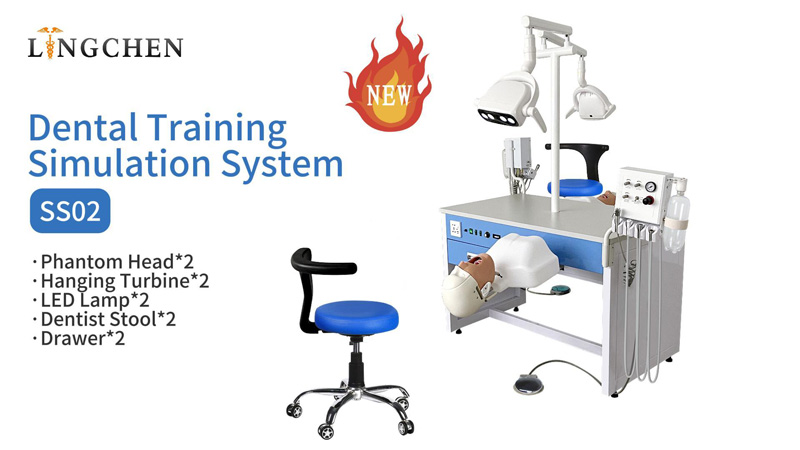
The Lingchen Dental Training Simulation System introduces a practical concept:
One workstation designed for two students.
Instead of doubling laboratory space, institutions can increase training capacity within the same classroom footprint.
Key advantages include:
- Better utilization of classroom space
- Lower investment per student
- Easier laboratory planning
- Improved teacher supervision
- Flexible layouts for universities and dental training centers
For schools planning new simulation laboratories or upgrading existing facilities, this approach offers an effective balance between educational quality and operational efficiency.
Supporting Competency-Based Dental Education
Modern dental education focuses on developing clinical competence rather than simply completing exercises.
Simulation laboratories now play an essential role in helping students:
- Develop ergonomic working posture
- Practice four-handed dentistry
- Improve hand-eye coordination
- Build confidence before clinical practice
- Repeat procedures safely without patient risk
As AI-powered assessment tools continue to evolve, simulation systems provide the physical training environment where students repeatedly practice essential clinical skills before digital evaluation is introduced.
This combination of practical simulation and digital assessment represents one of the most important trends shaping dental education today.
Sustainable Investment for Universities
Educational institutions increasingly consider long-term operating costs when selecting equipment.
A well-designed simulation laboratory should offer:
- Long service life
- Easy maintenance
- Flexible classroom configuration
- Efficient use of infrastructure
- Scalability for future expansion
Rather than replacing existing teaching methods, simulation systems should integrate smoothly into current curricula while remaining adaptable to future educational technologies.
Looking Ahead
The future of dental education is not defined by technology alone.
Successful simulation laboratories combine:
- Efficient classroom design
- High-quality practical training
- Digital learning integration
- Sustainable investment
- Student-centered education
As AI, digital assessment, and simulation technologies continue to develop, institutions that invest in flexible and efficient training environments today will be better prepared for the next generation of dental education.
For universities, dental schools, and training centers see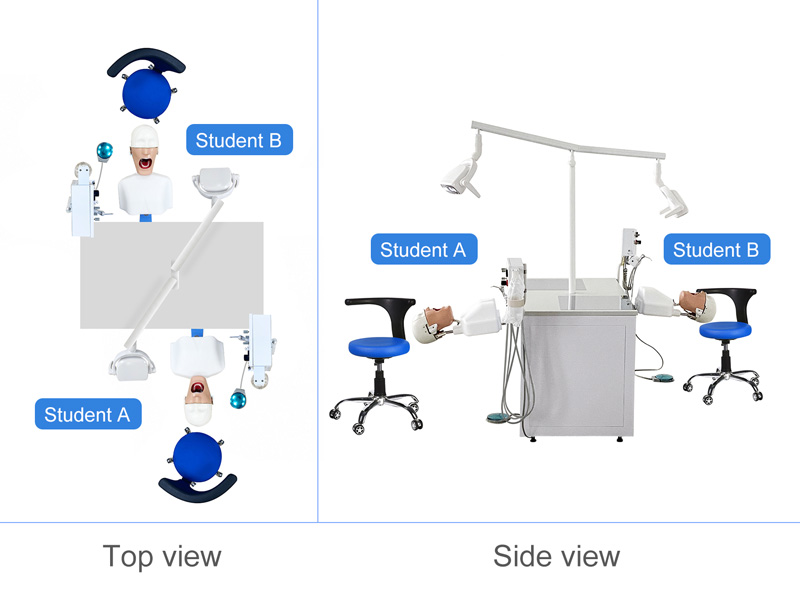 king to expand teaching capacity without expanding facilities, space-saving dental training simulators offer a practical solution that supports both educational excellence and long-term sustainability.
About Lingchen Dental
Lingchen Dental specializes in providing comprehensive dental education solutions for universities, dental schools, and professional training institutions worldwide.
Its One Table Two Students Dental Training Simulation System is designed to maximize laboratory efficiency while delivering realistic preclinical training, helping institutions build modern simulation laboratories that are practical, scalable, and ready for the future of dental education.
Post time: Jul-02-2026