
A dental handpiece is one of the most frequently used instruments in a dental clinic. During daily procedures, it is exposed to saliva, blood, tooth debris, and high-speed rotation conditions. Proper cleaning and maintenance are essential to ensure reliable performance, infection control, and longer service life.
Whether you are using a standard high-speed turbine or an advanced LED dental handpiece, following the correct cleaning procedure helps protect the internal cartridge, bearings, and spray system.
In this guide, we will explain how to clean a dental handpiece properly and share practical maintenance tips for daily clinical use.
Why Is Dental Handpiece Cleaning Important?
A high-speed dental handpiece operates at extremely high rotational speeds. Without proper cleaning and lubrication, contaminants can enter the internal mechanism and cause:
- Reduced rotation speed
- Increased vibration and noise
- Poor water spray performance
- Shorter cartridge lifespan
- Higher maintenance costs
Regular cleaning also supports infection prevention protocols in dental clinics.
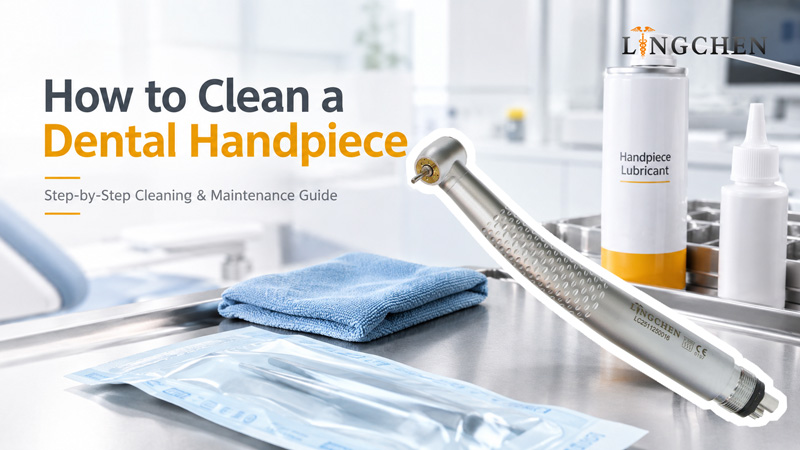
Step-by-Step: How to Clean a Dental Handpiece
Step 1: Remove the Bur Immediately After Use
After completing treatment:
- Remove the dental bur from the handpiece.
- Check that no debris remains around the chuck area.
- Avoid leaving the bur installed for long periods.
Removing the bur helps prevent contamination buildup and protects the chuck mechanism.
Step 2: Clean the External Surface
Before lubrication:
- Wipe the handpiece surface with approved disinfectant.
- Remove blood, saliva, and visible debris.
- Use a soft cloth or cleaning material.
Avoid soaking the handpiece in liquid unless the manufacturer specifically allows it.
Step 3: Lubricate the Dental Handpiece
Lubrication is one of the most important steps in handpiece maintenance.
Proper lubrication helps:
- Reduce friction
- Protect bearings
- Maintain smooth rotation
- Extend cartridge service life
For high-speed handpieces with ceramic bearings, regular lubrication helps maintain stable performance and durability.
Lingchen high-speed dental handpieces use ceramic bearing cartridges designed for wear resistance, lower friction, and stable operation.
Step 4: Run the Handpiece After Lubrication
After applying lubricant:
- Connect the handpiece to the dental unit.
- Run it for several seconds.
- Allow excess oil to discharge.
This ensures the lubricant reaches the internal rotating components.
Step 5: Sterilize the Dental Handpiece
Most modern dental handpieces require sterilization after each patient.
General sterilization workflow:
- Clean the handpiece.
- Lubricate according to manufacturer instructions.
- Place it into a sterilization pouch.
- Use an appropriate autoclave cycle.
Always follow the specific sterilization instructions provided by the handpiece manufacturer.
How Often Should a Dental Handpiece Be Cleaned?
A dental handpiece should be cleaned and maintained:
| Frequency | Recommended Action |
|---|---|
| After every patient | Clean, lubricate, and sterilize |
| Daily | Check spray holes and external condition |
| Weekly | Inspect rotation performance |
| Regularly | Professional maintenance if abnormal noise appears |
Common Mistakes When Cleaning Dental Handpieces
1. Skipping Lubrication
Some users only sterilize the handpiece but forget lubrication.
High-speed turbines require proper lubrication because internal bearings experience continuous high-speed movement.
2. Using Incorrect Cleaning Chemicals
Strong chemicals may damage:
- Surface coating
- Internal components
- O-rings
Always use cleaning products recommended for dental instruments.
3. Blocking Water Spray Holes
A blocked spray system can affect cooling performance.
Regularly check spray holes to ensure stable water flow during treatment.
4. Dropping or Impacting the Handpiece
Dental handpieces contain precision components.
Avoid:
- Dropping the handpiece
- Excessive pressure during cleaning
- Incorrect storage
Tips to Extend Dental Handpiece Lifespan
Besides regular cleaning, dentists can improve handpiece durability by:
Use Quality Dental Burs
Poor-quality burs may increase vibration and wear.
Maintain Correct Air Pressure
Incorrect pressure may affect turbine performance.
Check Water Spray Regularly
Stable cooling helps protect both the bur and internal components.
Store Properly
Keep handpieces clean and protected when not in use.
Choosing a Dental Handpiece with Easier Maintenance
When selecting a high-speed dental handpiece, dentists should consider:
- Bearing quality
- Cleaning compatibility
- Sterilization capability
- Water spray design
- LED visibility system
- Long-term reliability
Lingchen LED high-speed dental handpiece features:
- 6 LED lights for brighter treatment visibility
- Up to 90% shadow decrease
- Class A cartridge
- Ceramic bearing technology
- Push-button bur replacement
- Stable water spray system
These features are designed to provide clearer visibility and reliable daily performance for dental professionals.
Conclusion
Cleaning a dental handpiece correctly is a simple but important routine for every dental clinic. Regular cleaning, lubrication, and sterilization help maintain performance, reduce unexpected repairs, and extend the working life of the instrument.
A reliable dental handpiece combined with proper maintenance can support safer and more efficient dental treatments.
Post time: Sep-19-2026